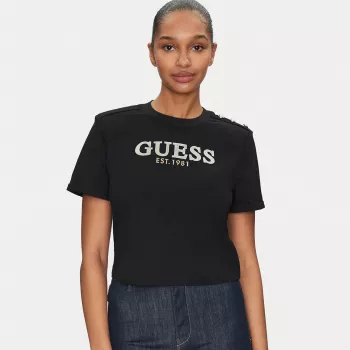
Spotting a fake Guess shirt comes down to checking a few details that counterfeiters often get wrong: label quality, stitching, logo execution, fabric feel, and seller credibility. Take a minute to inspect the shirt closely under good light and compare what you see to known authentic Guess pieces.
Authentic Guess shirts usually have crisp, centered labels with clean edges and consistent fonts. Look for misspellings, uneven spacing, crooked printing, or tags that feel thin and scratchy. The care/content tag should be securely sewn, easy to read, and include consistent sizing and manufacturing info.
Counterfeits commonly show uneven stitching, loose threads, puckering seams, or sloppy hems. On a real Guess shirt, the seams tend to be straight and reinforced in high-stress areas. Flip the shirt inside out and check if the stitching looks uniform across the collar, shoulders, and side seams.
Guess logos and graphics are typically sharp and well-aligned. Watch for blurry printing, off-center placement, incorrect colors, or a logo that looks “stretched.” If there’s embroidery, it should be dense and clean, not sparse or fraying.
If the material feels unusually thin, overly shiny, or rough, it may be counterfeit. Authentic pieces generally have a consistent hand-feel and drape. When possible, compare the cut and sizing to a known genuine Guess shirt—fakes often fit oddly in the shoulders or length.
Extreme discounts, vague product photos, and missing close-ups of tags are common red flags. Check seller ratings and return policies, and be cautious of listings that avoid showing the inside labels. For a deeper walkthrough, see this guide on how to spot a fake Guess shirt.
Prices far below normal, stock photos only, no tag close-ups, and unclear return policies are frequent warning signs. Also be wary of sellers with inconsistent reviews or multiple “new” storefronts.










Leave a comment